


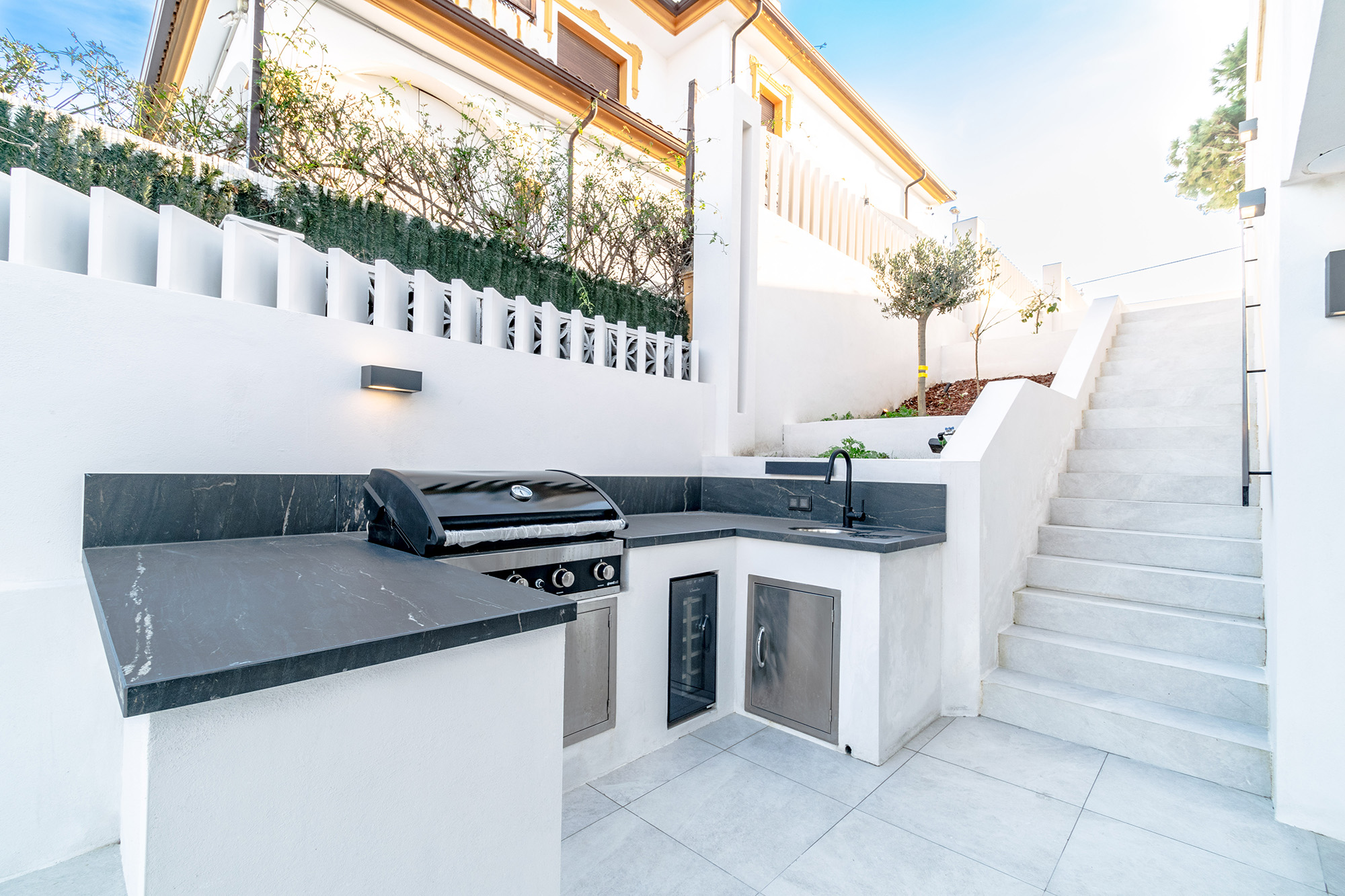
Covered or uncovered changes the whole conversation
Before comparing materials, work out how much shelter the counter actually gets. A fully roofed outdoor kitchen, with solid cover overhead and reasonable protection from driving rain, sits in a very different category to an open patio run that takes direct afternoon sun and every storm that comes through. The first has almost as many material options as an indoor kitchen. The second narrows the field considerably.
Be honest about the in between cases too, because most West Houston outdoor kitchens are partially covered at best. A pergola with slats, a retractable awning or a roof that only shelters the grill still leaves long stretches of counter exposed. Measure where the sun actually lands at three in the afternoon in summer, not where you assume it does. That patch of counter is the one the material choice has to survive.
Why quartz and granite behave differently outside
Engineered quartz is one of the best performing surfaces you can put in a kitchen. It is dense, non porous, needs no sealing, resists staining well and comes in a consistency of pattern natural stone cannot match. Indoors it is genuinely hard to beat, which is why it sits in so many homes across the area. Outdoors, the picture changes, because quartz is stone combined with resins and pigments, and prolonged direct ultraviolet exposure can affect those over time.
This is why most engineered quartz manufacturers place limits on outdoor use in their warranty terms, and some exclude it altogether. The specifics vary by brand and by product, so the practical step is to check the warranty for the exact slab you are considering rather than treating quartz as a single category. In a fully covered, properly shaded outdoor kitchen, some products are more permissive than people assume. In full unshaded sun, granite, natural stone and porcelain slab are the more straightforward choices.
Colour affects comfort more than people expect
A dark countertop in direct Texas sun gets genuinely hot to the touch. Not warm, hot, to the point where leaning on it in July is unpleasant and setting a bowl of anything cold on it is pointless. This is purely down to solar absorption, and it applies to every material equally. A black granite counter and a black porcelain counter will both do it.
Lighter colours stay noticeably cooler and are far more forgiving to use through summer. They also hide pollen, dust and the fine grit that settles on every outdoor surface in this part of the state better than a dark polished surface does, which shows every mark. If you have your heart set on something dark, put it under cover and keep the exposed sections lighter. Mixing materials across a single outdoor kitchen is entirely normal and often the sensible answer.
Sealing and edge detail matter more outdoors
Natural stone outdoors needs sealing more often than the same stone indoors. There is no climate control, rain and irrigation hit the surface directly, and grease from cooking sits alongside pollen and organic debris. None of that is a reason to avoid natural stone, which performs very well outside and handles UV without difficulty. It just means the maintenance rhythm is different, and it is worth knowing that going in rather than being surprised by it later.
Edge profile deserves a thought too, for a practical reason rather than an aesthetic one. Simple square or eased edges shed water cleanly. Heavily shaped profiles with recesses and returns hold water and collect debris in the grooves, which is a nuisance to clean on a surface that lives outside. The plainer edge usually looks better on an outdoor run anyway, because it reads as solid and robust rather than as indoor furniture moved outside.
The structure under the slab matters as much as the slab
Indoor countertops sit on cabinets. Outdoor ones usually sit on a masonry or steel frame, which changes how overhangs and unsupported spans need to be handled. A bar overhang on an outdoor island needs proper support built into the structure, because the slab is doing more work and dealing with more thermal movement than it would inside.
This is why the fabrication and templating conversation should happen alongside the build rather than after it. Getting the frame right first makes the countertop installation straightforward. Getting it wrong means either visible brackets added late or an overhang that has to be reduced from what was planned. It is a sequencing issue more than a technical one, and it is easily avoided.
KATY TILE & MARBLE has been fabricating and installing countertops for homeowners across @@service-areas@@ since the 1990s, and our team can look at how exposed your space actually is before recommending a material for it. Visit @@all-showrooms@@ to see full slabs in person rather than samples, browse our countertops and natural stone selection, or contact us to arrange a free estimate.